





How Promotional Products Boost Brand Recall: The Science Behind It
Posted by High Quality Promo on 1st Feb 2026
Every marketer knows that brand recall — the ability of consumers to remember your brand when prompted — is one of the most valuable metrics in advertising. But what many business owners do not realise is that promotional products consistently outperform almost every other advertising medium when it comes to building lasting brand memory.
In this article, we dive into the research and science behind why promotional products are so remarkably effective at embedding your brand in people's minds — and how Australian businesses can leverage this in 2026.
The Numbers Speak for Themselves
Multiple studies conducted by the Advertising Specialty Institute (ASI), the Australasian Promotional Products Association (APPA), and the British Promotional Merchandise Association (BPMA) have produced compelling statistics:
- 85% of people remember the advertiser who gave them a promotional product
- 83% of consumers like receiving promotional products with an advertising message
- 89% of people can recall the advertiser on a promotional product they received in the last two years
- Promotional products generate 500% more referrals from satisfied customers compared to an appeal letter alone
- Nearly 50% of recipients use promotional products daily
- Promotional products deliver a cost-per-impression as low as $0.005 — making them one of the most cost-effective advertising media available
Compare that to a TV commercial that viewers skip, a digital ad blocked by software, or a social media post lost in an infinite scroll. Promotional products physically exist in people's lives, and that makes all the difference.
The Psychology of Physical Objects
Why do tangible, branded items work so well? The answer lies in several well-documented psychological principles.
The Endowment Effect
Psychologists have long known that people assign greater value to objects they physically possess. This is called the endowment effect. When someone receives a branded water bottle, they immediately feel a sense of ownership and, by extension, a positive association with the brand that gave it to them.
Reciprocity
The principle of reciprocity — one of Robert Cialdini's six principles of persuasion — states that when someone gives us something, we feel an innate obligation to return the favour. A free promotional product creates a subtle but powerful sense of goodwill toward the giver. When that person later needs a product or service you offer, your brand is more likely to come to mind.
The Mere Exposure Effect
Research shows that the more frequently we are exposed to something, the more favourably we view it. This is the mere exposure effect, first documented by psychologist Robert Zajonc. A branded pen used daily, a coffee cup seen every morning, or a tote bag carried weekly all provide repeated exposures to your brand — often without the recipient even consciously noticing.
Haptic Memory
Touch is one of the most powerful senses for forming memories. Physical objects engage haptic memory — the brain's ability to remember things we have physically handled. This is why a tangible promotional product creates a stronger memory trace than a visual-only ad like a banner or billboard.
Promotional Products vs Other Advertising Media
How do promotional products compare to other common advertising channels? The research is clear:
Cost Per Impression (CPI)
- Promotional products: $0.005 per impression (based on average use over product lifespan)
- Television: $0.018 per impression
- Magazine advertising: $0.033 per impression
- Digital display ads: $0.002–$0.010 per impression (but with significantly lower recall rates)
Retention and Lifespan
- Outerwear: Kept for an average of 16 months, generating 6,100+ impressions
- Bags: Kept for an average of 11 months, generating 3,300+ impressions
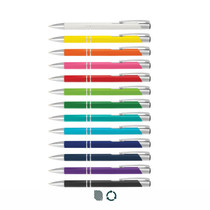
- Writing instruments: Kept for an average of 9 months, generating 3,000+ impressions
- Drinkware: Kept for an average of 12 months, generating 1,400+ impressions
- USB drives: Kept for an average of 13 months, generating 700+ impressions
By contrast, a digital ad is seen for a fraction of a second. A TV commercial lasts 30 seconds. A promotional product can be in someone's life for months or even years.
The Utility Factor: Why Useful Products Win
Not all promotional products are created equal. Research consistently shows that the most effective promotional items are ones that recipients find genuinely useful.
The top reasons people keep promotional products are:
- Usefulness (77% of recipients)
- Quality (72%)
- Attractiveness (45%)
- Connection to the brand (24%)
This is why practical items like pens, drinkware, bags, and tech accessories consistently outperform novelty items. A branded pen used daily at work delivers thousands of impressions. A novelty toy ends up in a drawer.
Emotional Connection and Brand Loyalty
Promotional products do more than just build awareness — they build emotional connections. Studies show that:
- 71% of people who received a promotional product in the past 12 months could recall the brand, product, and message
- 62% of people reported a more favourable impression of a company after receiving a promotional product
- 52% of people did business with the advertiser after receiving a promotional product
This emotional dimension is what separates promotional products from purely digital advertising. A physical gift creates a personal connection that a banner ad simply cannot replicate.
Applying the Science: Best Practices for Australian Businesses in 2026
Understanding the science is valuable, but applying it is what matters. Here is how to maximise the brand recall impact of your promotional products:
1. Choose Useful Products
Select items that recipients will use regularly. Daily use equals daily brand exposure. Pens, drink bottles, bags, and tech accessories are proven winners.
2. Invest in Quality
A cheap product that breaks or fades damages your brand rather than enhancing it. Quality promotional products are kept longer and used more, multiplying your impressions.
3. Ensure Your Branding Is Visible but Tasteful
Your logo should be clearly visible without overwhelming the product design. People are more likely to use (and be seen using) a stylishly branded item than one with an oversized logo.
4. Match the Product to the Recipient
A tech startup audience might value a branded power bank. A wellness brand might choose a reusable water bottle. Alignment between the product and your brand values strengthens the association.
5. Combine Physical and Digital
Include QR codes on products that link to landing pages, special offers, or content. This bridges the gap between the physical product and your digital ecosystem.
The Bottom Line
The science is unequivocal: promotional products are one of the most effective tools available for building brand recall, creating positive associations, and driving business outcomes. In a world saturated with digital noise, a tangible branded item that people hold, use, and keep is an increasingly rare and valuable form of advertising.
Ready to put the science of brand recall to work for your business in 2026? Contact High Quality Promo today to discuss the right products for your brand, audience, and objectives.
