





The Complete Guide to Ordering Promotional Products in Bulk
Posted by High Quality Promo on 1st Feb 2026
Ordering promotional products in bulk can seem daunting — especially if it is your first time. How many do you need to order? How long will it take? What artwork files do you need? What affects the price?
At High Quality Promo, we guide Australian businesses through the bulk ordering process every day. This comprehensive guide answers every question you might have about ordering branded merchandise in 2026, so you can make informed decisions and get the best value for your investment.
Understanding Minimum Order Quantities (MOQs)
Most promotional products have a minimum order quantity — the smallest number of units you can order. MOQs exist because of the setup costs involved in custom branding (printing plates, screen setups, engraving templates, etc.).
Typical MOQs by Product Category
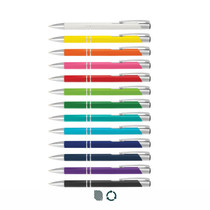
- Pens: 100–250 units
- Drinkware: 25–100 units
- Bags and totes: 25–100 units
- Apparel: 10–50 units (depending on decoration method)
- Technology products: 25–100 units
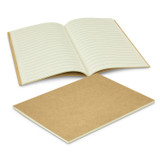
- Notebooks and stationery: 50–100 units
- Lanyards: 50–100 units
Some products — particularly those using digital printing — have lower MOQs, sometimes as low as 10 or even 1 unit. However, per-unit costs will be significantly higher at low quantities.
Lead Times: How Long Will It Take?
Lead time is the period from when you approve the artwork proof to when your products are delivered. Understanding lead times is critical for planning campaigns, events, and gift deliveries.
Standard Lead Times in Australia (2026)
- Locally stocked products with simple branding: 5–10 business days
- Locally stocked products with complex branding: 10–15 business days
- Indent (overseas manufactured) orders: 4–8 weeks
- Fully custom or bespoke products: 6–12 weeks
Factors That Affect Lead Times
- Stock availability — Products held in Australian warehouses ship faster than those sourced from overseas
- Branding complexity — Multi-colour prints, embroidery, and engraving take longer than single-colour pad prints
- Order size — Very large orders may require additional production time
- Seasonal demand — EOFY (May–June) and pre-Christmas (October–November) are peak periods when lead times extend
- Artwork approval delays — The clock does not start until you approve the artwork proof
Pro tip: Always add a buffer of at least one week to account for unexpected delays. For critical deadlines (events, launches), add two weeks.
Artwork Requirements
Your artwork is the foundation of a great-looking promotional product. Providing the right files from the start avoids delays and ensures the best possible print quality.
Preferred File Formats
- Vector files (AI, EPS, SVG, PDF) — These are the gold standard. Vector files can be scaled to any size without losing quality. If you have a graphic designer, ask them for your logo in vector format.
- High-resolution raster files (PNG, TIFF, JPG) — Acceptable if vector files are unavailable. Minimum resolution should be 300 DPI at the print size.
- Avoid: Low-resolution images from websites, Word documents, PowerPoint files, and screenshots. These will result in blurry, pixelated prints.
Colour Specifications
- Pantone (PMS) colours — The industry standard for accurate colour matching. Provide your Pantone colour codes for consistent branding across all products.
- CMYK — Used for full-colour digital printing. Suitable for complex designs with gradients and photographs.
- Note: Colours may appear slightly different on various materials (white plastic vs dark metal vs cotton fabric). Your supplier should provide a proof showing expected colour output.
Pricing: What Affects the Cost?
Promotional product pricing depends on several key factors. Understanding these helps you budget accurately and find the best value.
Key Pricing Factors
- Quantity — This is the biggest factor. Higher quantities mean lower per-unit costs due to economies of scale
- Product type and quality — A basic plastic pen costs less than a premium metal pen. A cotton tote costs less than a leather laptop bag
- Branding method — Pad printing is cheaper than embroidery. Screen printing is cheaper than full-colour digital printing
- Number of colours — More print colours generally means higher setup costs
- Number of print positions — Branding on one side vs both sides vs multiple locations affects price
- Setup fees — One-off charges for preparing print screens, embroidery digitisation, or engraving templates. These are typically $30–$80 per order
Sample Pricing Tiers (Indicative)
Here is a general example of how quantity affects pricing for a standard branded drink bottle:
- 50 units: $12.00 per unit
- 100 units: $9.50 per unit
- 250 units: $7.80 per unit
- 500 units: $6.50 per unit
- 1,000+ units: $5.20 per unit
As you can see, the jump from 50 to 250 units can save you 35% or more per item. This is why many businesses order slightly more than they need — the per-unit savings often justify the additional investment.
The Ordering Process: Step by Step
- Enquiry — Contact your supplier with your requirements: product type, quantity, budget, deadline, and branding preferences
- Quote — Receive a detailed quote including unit price, setup fees, shipping, and GST
- Artwork submission — Provide your logo files and colour specifications
- Artwork proof — Review a digital mock-up showing how your branding will appear on the product
- Approval — Approve the proof and confirm the order (this starts the production clock)
- Production — Your products are branded and quality-checked
- Delivery — Products are shipped to your specified address
Common Mistakes to Avoid
- Ordering too late — Start planning 6-8 weeks before your deadline, longer for large or custom orders
- Skipping the sample — Always request a physical sample for large or expensive orders
- Low-resolution artwork — This is the number one cause of print quality issues
- Not checking the proof carefully — Spelling errors, wrong colours, and incorrect logos are caught at the proof stage. Review it thoroughly
- Underestimating quantities — It is often cheaper to order more upfront than to place a reorder with fresh setup fees
- Ignoring shipping costs — Factor in delivery costs, especially for heavy items like drinkware or bags
Tips for Getting the Best Value
- Consolidate orders — Order multiple product types at once to potentially qualify for better pricing
- Plan ahead — Avoid rush fees by ordering well in advance
- Build relationships — A long-term relationship with a trusted supplier often leads to better pricing and priority service
- Consider indent orders — For very large quantities, manufacturing overseas (indent) can offer significant savings, though lead times are longer
- Ask about overruns — Suppliers sometimes produce a few extra units. Ask if these can be included at no extra cost
Ready to Place Your Bulk Order?
Ordering promotional products in bulk does not have to be complicated. With the right supplier, clear artwork, and adequate lead time, the process is straightforward and the results are outstanding.
At High Quality Promo, we make bulk ordering easy for Australian businesses of all sizes. Whether you need 100 branded pens or 10,000 custom drink bottles, we will guide you through every step.
Contact us today for a free quote, or browse our full product range to start planning your next order.
